Performing a comprehensive content audit before an app’s migration
United Overseas Bank (UOB) had two apps running simultaneously in Thailand.

TMRW by UOB was a digital-only bank built for the younger generation.

UOB Mighty was the bank’s official app used by people from all walks of life.
For many reasons (app maintenance costs and market cannibalisation being the biggest ones), both apps were to be merged into UOB TMRW, an all-inclusive app that would serve the whole country. And that called for a comprehensive content audit to make sure the content not only made sense, but aligned with the voice, style and guidelines we envisioned for it.
Ensuring content clarity
Anything I needed to read more than once to understand, I rewrote. If I still couldn’t understand the content after multiple tries, I clarified with my relevant colleagues (i.e. product owners, legal team, or even the Thai team) before I rewrote.
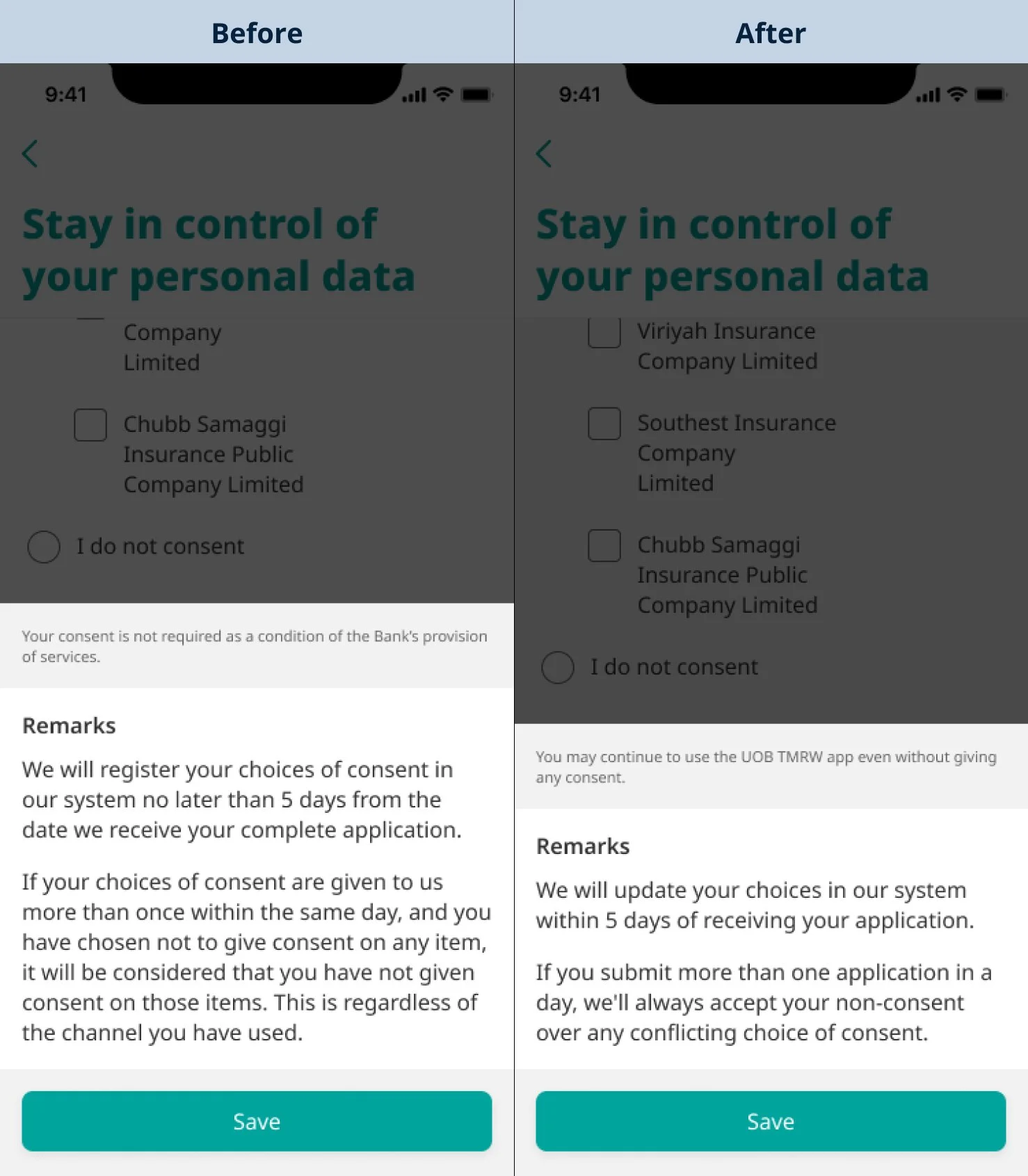
More importantly, I fixed misleading content – these required a deeper understanding of the flow and content, and were harder to identify.
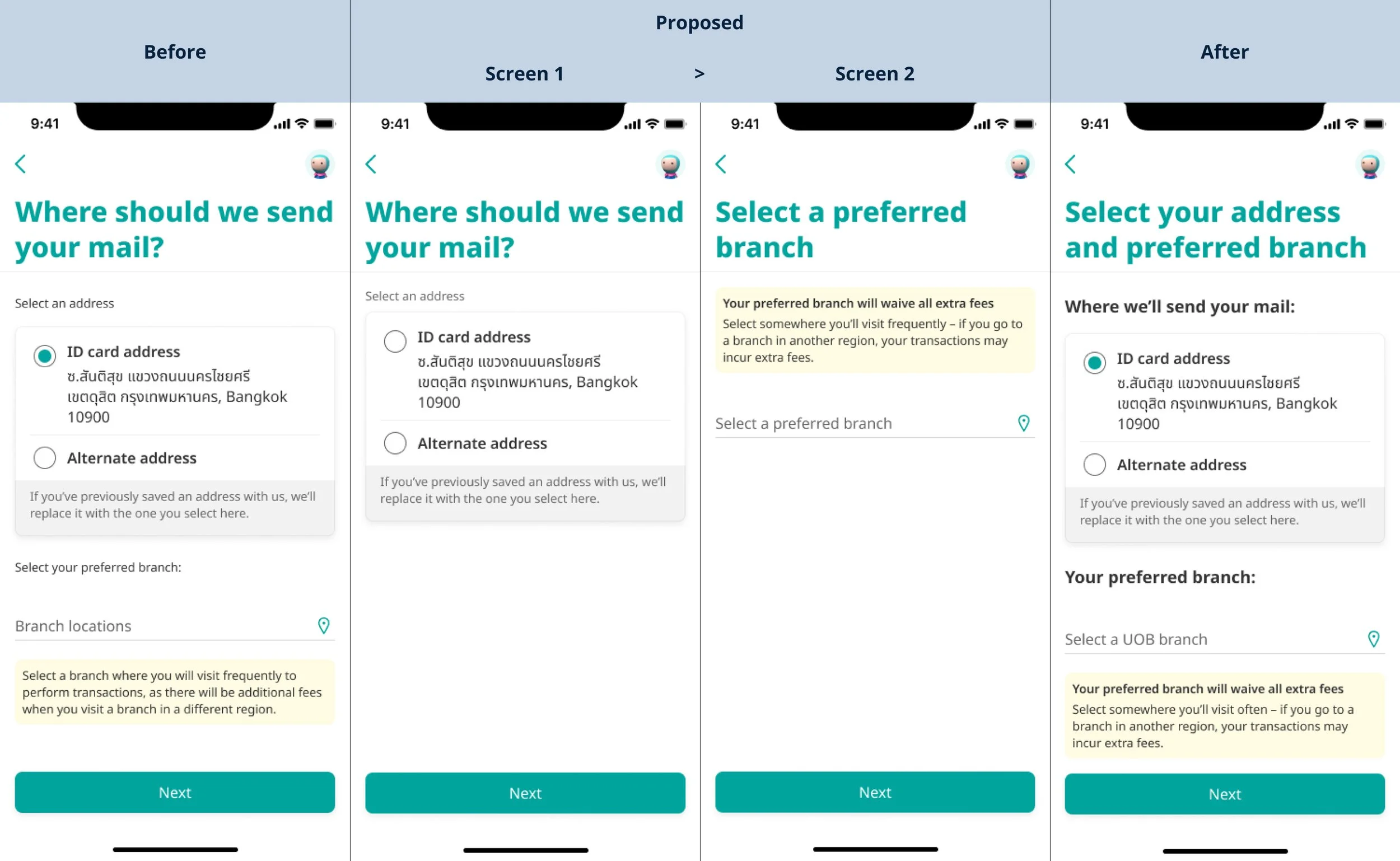
ENsuring clarity:
What’s a ‘Preferred Branch’?
Before: At first glance, a user’s ‘preferred branch’ seems to be where they self-collect their mail. It actually has nothing at all to do with the user’s mail, which made the screen title quite misleading.
Proposed: We suggested to house the ‘preferred branch’ selection in the next screen instead, to make the two items distinctly different from each other. Bringing the infobox on top would also help users understand the term before they make their selection.
After: Developmental constraints made us settle for simple content and design tweaks, but we made the most of them to ensure everything was clear to the users.
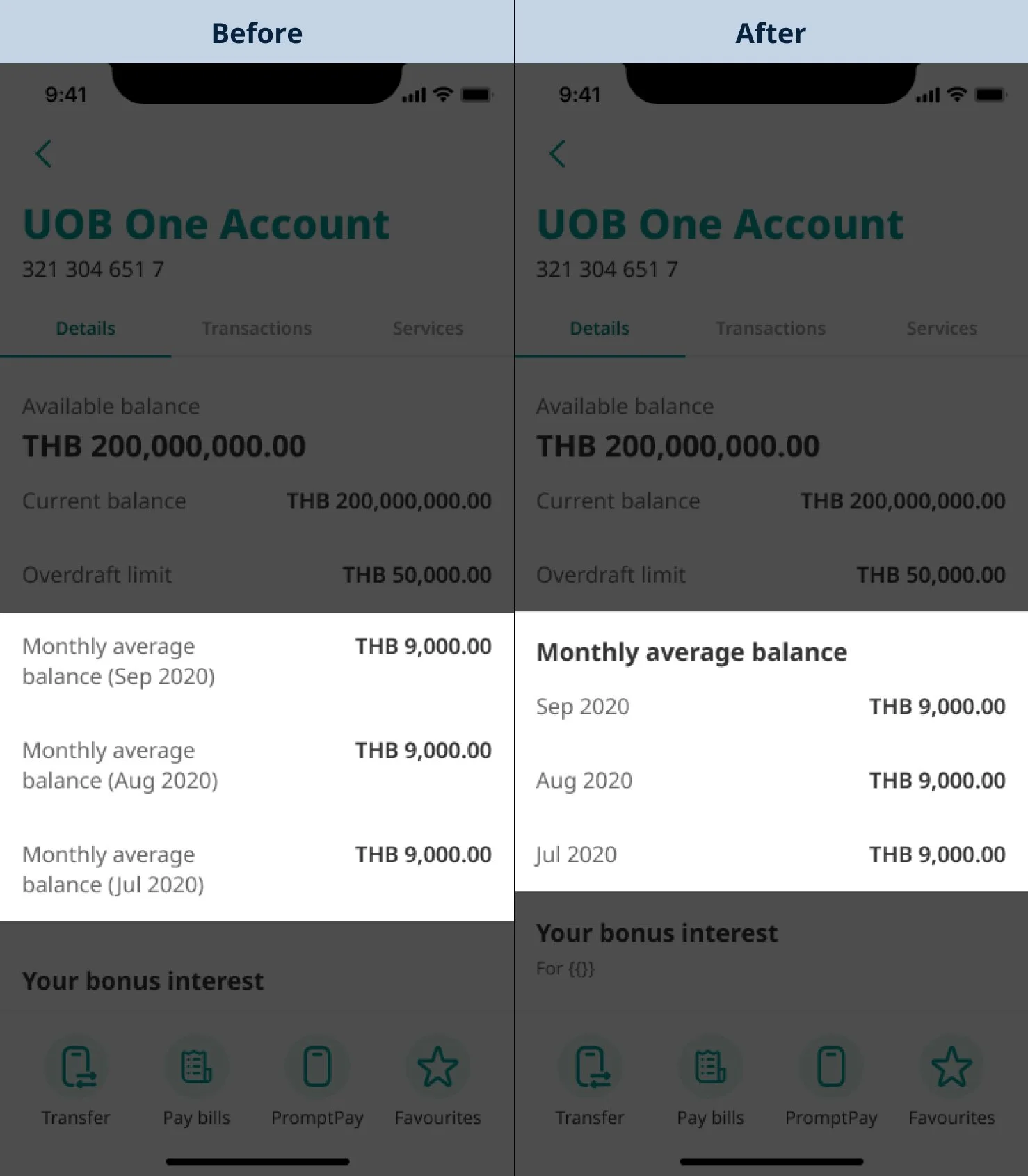
Improving information hierarchy
I also identified areas in the app where information hierarchy could be improved. Naturally, I had to work very closely with my designers to explore the right components to work with the right content.
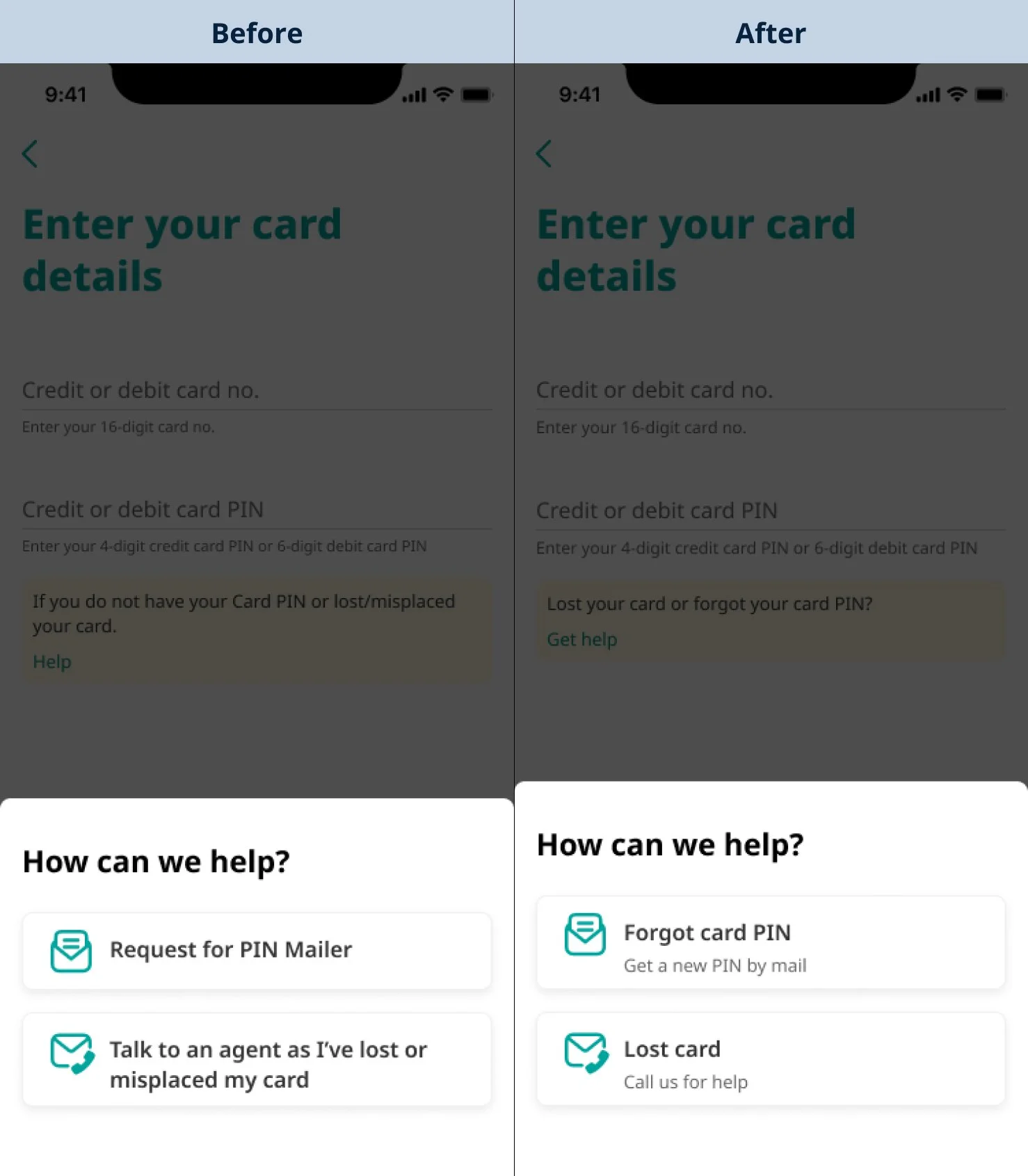
Using terms consistently
Throughout the app, I made sure to use the same words to refer to the same thing.
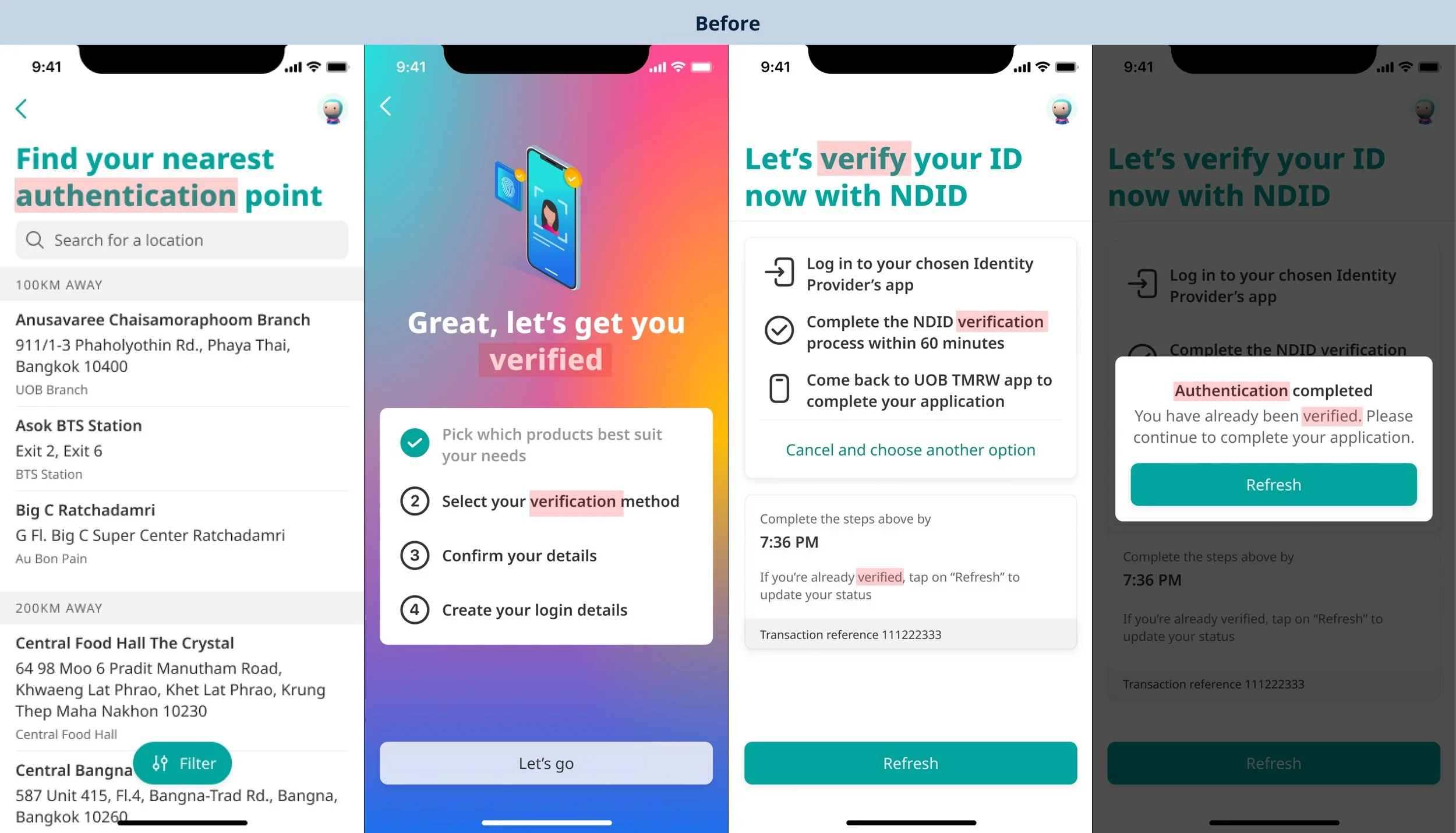
Standardising terminology:
’verify’ vs ‘authenticate’
Before: In a single flow, the terms verify and authenticate were used interchangeably to mean the same thing — in the most egregious example, a pop-up used Authentication in its heading, and verified in its body.
After: We got on a call with our product owners, and realised that the inconsistencies came from the regulatory body (National Digital ID Thailand). After presenting our case to NDID Thailand with a simple deck, we got approval to use verify across the board – a much simpler and more commonly-seen word than authenticate.
This was the biggest content audit I’ve ever done – it took 8 months, scrubbing through over 7,000 screens, and working virtually with dozens of stakeholders across multiple teams and even country borders.
Beyond that, there were many country-specific products and terms we had to repeatedly clarify with the Thai team about. As things got lost in translation, especially with complex topics like insurance or credit card mechanics, I had to do plenty of deciphering, guessing, questioning, writing and rewriting until I got it exactly right.
And after all that, the app is finally live on the App Store.
The launch was also featured on the Bangkok Post, and YouTube.